
Today we visited the NEWater plant and Visitor Center in Singapore, and it was exciting to see their development with water. The NEWater plant treats waste water in a three-step process and then feeds the water back into Singapore’s system. As part of the tour, we got to taste the recycled water, and I must admit, there is little difference from other tapwater.
The plant treats water by microfiltration firs,t which filters out microscopic particles including bacteria. Second is the reverse osmosis which removes undesirable contaminants by flowing the water through a filter in reverse. The last step is the ultraviolet disinfection in which the water passes through ultraviolet light to ensure any remaining organisms are removed. After this process has been completed, chemicals are added to the water to restore the pH balance. Now the water is ready for drinking.
These steps are similar but also different from the steps we apply in the United States. In my home town of Seaside, CA, waste water is treated by the MontereyOne Water company which is in the process of treating and feeding waste water back into the public flow upon voter decision. Currently they also use a three-step process and the fourth step is being introduced to bring into consumption. Their steps include, first running the water through a large screen to remove large materials. Second, the water flows into primary clarifiers where gravity sinks or floats solids in the water and then are removed. Next the water is introduced into a bioflocculation basin which contains millions and millions of microbes that decompose the organic matter in the water. Lastly the water is distributed back into the ocean.
The idea of recycled water to the tap has brought a lot of controversy in California. Many of the arguments against this process are because of the thought of drinking “toilet” water. To be sustainable in the future, the process of using recycled water is a must otherwise production of water will become a much bigger issue. Although I strongly suggest another step should be added to insure the water quality is adequate and this step should include a testing step. Somehow and in some way, we have to change the minds of the people that treated water is the same or better quality after the treatment. The best way to do that is with a public campaign. It’s a difficult topic to understand but it’s the future for our society.
Alexander Miller


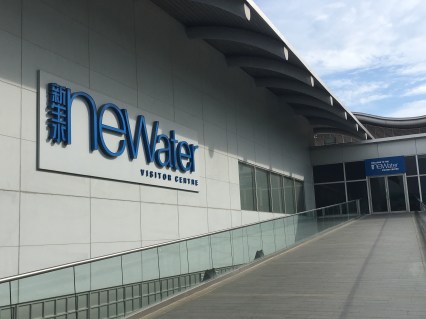 We were treated to an interesting lecture about


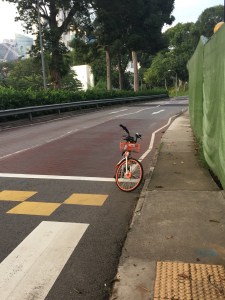
 I have been taking advantage of one of the the many bike share companies here in Singapore. The picture is of an Anywheel bike. It’s been incredibly convenient – bikes are unlocked with a smartphone app, and the app keeps track of the bike’s whereabouts via GPS. And even though public transportation is quite well designed, having a simple means of transportation for shorter distances has been very convenient, especially in this tropical heat and humidity. The government also encourages use of bikes (and electric scooter) by allowing people to ride on the sidewalks and setting aside special bike lanes on the sidewalks in some parts of the city. One of the great benefits for a tourist like me has been the ability to avoid the street and cars. Singapore follows the British in driving on the left side of the road, which has led to me having near-accidents in the past when I have been in this part of the world.

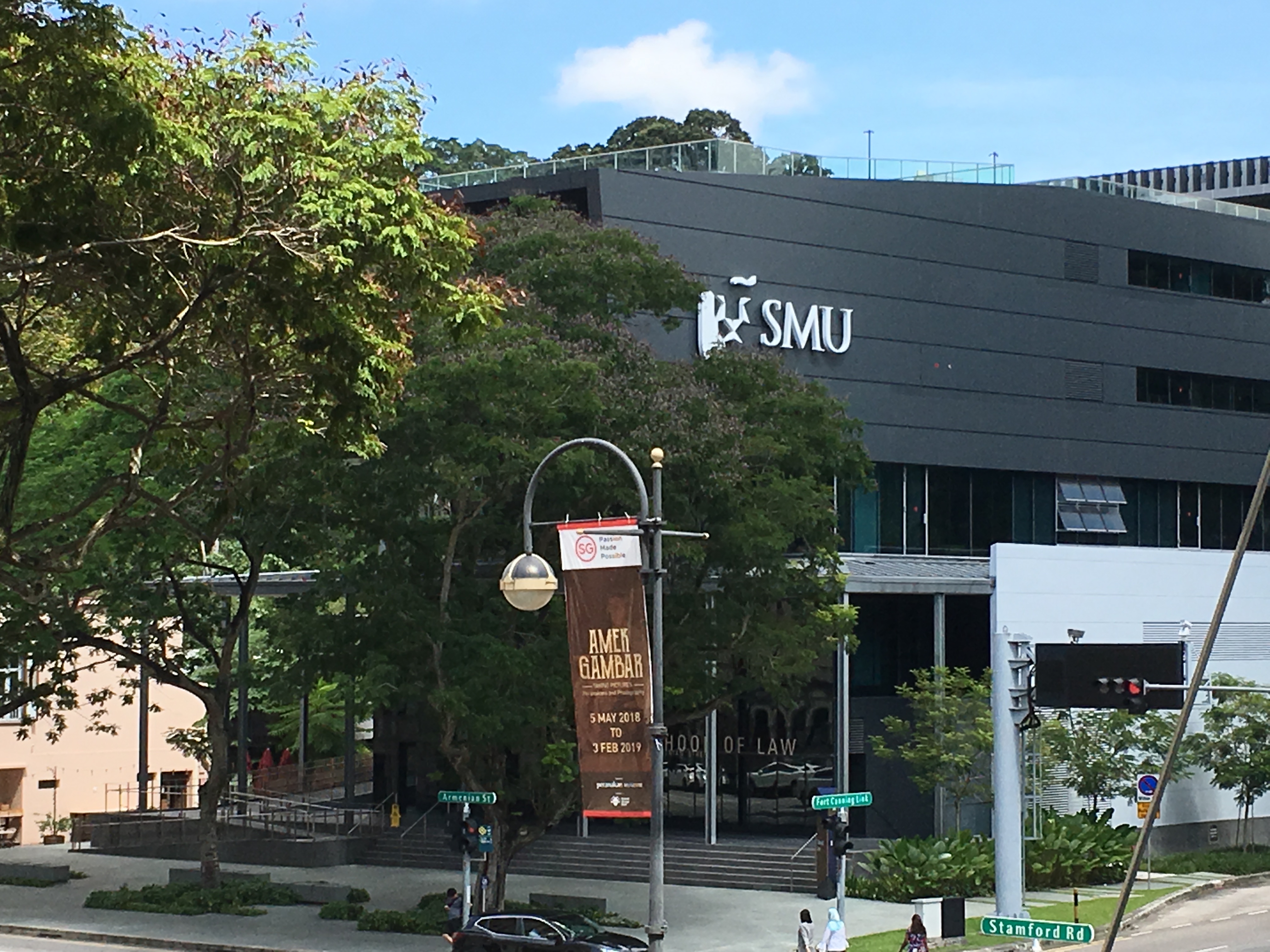
 Our “Business and the Environment” course had the opportunity to visit Singapore’s Supreme Court on Wednesday. Fascinating to hear the story of this legal system and how this country’s judiciary has been taking active steps to market its system across Asia, especially as a preferred forum and choice of law system to resolve commercial disputes. We also had a chance to observe part of a criminal appeal that was taking place in the High Court. One of the most interesting aspects of our visit was the back-story to the architecture of the building Supreme Court building. The top floor is designed to resemble a space ship (a flying saucer) and symbolizes the institution’s forward-leaning future-oriented perspective.
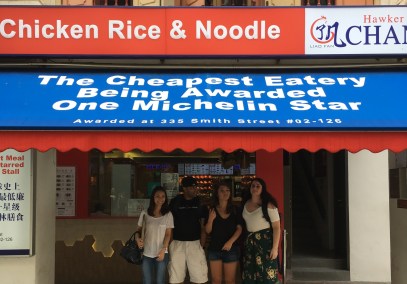 It’s been hot but exciting to be in the heart of Southeast Asia. After a day’s worth of lectures on business organizations for the “Business and the Environment,” the students have been been exploring Singapore. On Tuesday, our post-class excursion was to check out the world’s cheapest Michelin-starred restaurant – the Liao Fan Hong Kong Soya Sauce Chicken Rice, a Hainan chicken rice Hawker stand at 335 Smith Street. We ended up at the newer, air-conditioned restaurant, where the price was less than $3 USD for the signature chicken rice meal. My personal review . . . Not bad, but I am not sure that the meal was Michelin-star-worthy. But either way, it was an interesting experience.




 Citizen Yang