I just noticed that they questionnaire/advice I provided to students in “The Advocate,” Santa Clara Law’s student newspaper, came out more than a month ago, February 17. Nevertheless, here it is, for your amusement, with a link to the Advocate. I posted the relevant page below. Dori Pina’s advice came first, so you’ll need to scroll down a bit.
Author Archives: citizenyang
Position: Columbia University Law School, Sabin Center Staff Attorney (2017-18) Deadline: not available, NY, NY)
http://columbiaclimatelaw.com/about-us/internships-and-job-openings/#Sabin
Sabin Center Staff Attorney
Columbia Law School’s Sabin Center for Climate Change Law is seeking an Associate Research Scholar who will serve as the Center’s staff attorney from September 2017 to September 2018. Reporting to the Faculty Director and Executive Director of the Center, the incumbent will develop and implement strategic research concerning climate change mitigation and adaptation; contribute to advocacy-oriented programs and projects; assist with the research administration of the Center; and supervise interns and volunteers.
Applicants must have received a J.D. or equivalent degree, and should have 3 years of work experience in environmental, energy or natural resources law and policy. Ability to exercise independent judgment, work under pressure, supervise multiple research and support staff, work with students from the law school and other graduate and undergraduate programs, and prioritize and carry out multiple tasks with minimal supervision is a must.
A detailed job description and instructions on how to apply online can be found by clicking the following link: academicjobs.columbia.edu/applicants/Central?quickFind=64347
Columbia University is an Equal Opportunity/Affirmative Action employer –Race/Gender/Disability/Veteran.
Santa Clara Magazine’s Article (“For the Record”) on Distinguished Alumnus John Cruden (Law ’74)
Santa Clara Magazine, our university’s alumni magazine, recently did a very nice piece on one of our illustrious alumni John Cruden (Law ’74). [By the way, the bear (Grizzly?), in the background, displayed in the office of Assistant Attorney General for the Environmental and Natural Resources Division of the US Department of Justice, is a courtesy of a loan from the U.S. Fish and Wildlife Service.]
https://magazine.scu.edu/scm/spring2017/features.cfm?b=439&c=24023
Richard Revesz op-ed on Pruitt’s seriously wrong-headed vision of environmental federalism
Professor Richard Revesz’s op-ed on all that is wrong with how EPA Administrator Pruitt has described and is envisioning environmental federalism, i.e. the allocation of power and the role of the states vis-a-vis the federal government on environmental issues. Really worth a read.
http://www.latimes.com/opinion/op-ed/la-oe-revesz-pruitt-epa-federalism-20170320-story.html
Santa Clara Law Students Win 2017 California Bar Environmental Negotiations Competition

Kudos to our environmental negotiation team of 2L students Charles Huh and Marinna Radloff (middle two) for winning the 2017 California Bar Student Environmental Negotiations Competition! Yay! (Pictured are also Attorney Coach, Martin Kopp ’12 (Corporate Counsel, Ooyala) and HMCE Competition Coordinator, Angela Nelson 3L.)
Santa Clara Law Students Win the 2017 CalBar Environmental Law Negotiations Competition
Funny satirical item about the Trump budget
Even though the Trump budget is both sad and upsetting, this piece was rather funny (including what it said about EPA’s budget cuts).
Reconsideration (repeal?) of fuel economy standards for 2022-2025 model year cars

EPA just posted the news release of Administrator Pruitt’s (and DOT Secretary Chao’s) decision to reexamine the fuel economy standards for model years 2022-2025. The decision was announced earlier by President Trump at a Michigan auto plant. The rationale for this reexamination, the complaint by auto-makers that they are having difficulties meeting the standards, is remarkably disappointing The rest of the world, especially Europe and Japan, already have much higher fuel economy standards than the US, and the EPA/DOT standards would only have made the US catch up. In other words, car-makers already have to build cars with higher fuel economy standards if they want to sell them in most of the rest of the world.
What is especially galling about this is the reason why the rest of the world is so far ahead. For more than 2 decades, between the mid-1980s to 2009, fuel economy standards were not increased, essentially allowing the US to fall far behind other industrialized countries. The Center for Climate and Energy Solutions has a nice chart that shows the fuel economy standards of various countries, including the US. The consequence? Not only will there be more greenhouse gas emissions, but consumers will pay more for gas usage. Sad.
Even sadder? Countries like China have more stringent standards. (Though in fairness, the standards only apply to new model years.) But at least, these countries have the right forward-looking policies on this issue in place.
Back in the early 80s, the Reagan Administration attempted to reverse air bag requirements of the preceding Carter Administration, designed to improve vehicle safety and save lives. The ensuing litigation resulted in a famous U.S. Supreme Court case, Motor Vehicles Manufacturers v. State Farm Mutual, which is taught in every administrative law course. The Supreme Court struck down the Reagan Administration’s attempt to roll back that regulation. In the end, the Reagan Administration was only able to slow down the process of making cars safer but didn’t change the eventual outcome – airbags in every vehicle. That same legal standard, asking whether the new Administration acted arbitrarily and capriciously in undoing the prior regulation, will be applied to the Trump/Pruitt regulatory roll-back effort when it is challenged in court.
On a completely different matter and for some levity, for yesterday’s Pi day activities at Santa Clara Law, I “took one for the team” and got “pied,” together with several other colleagues! Here’s the video. Enjoy.
Can’t quite believe what is going on at EPA
I am in some disbelief about what is going on at EPA, so fast and furious yesterday — just like the Trump tweets. First, there was the report of the resignation of Mustafa Ali, who had been the senior advisor on environmental justice at EPA. Really too bad to lose such an important advocate for these issues at the Agency.
And then there is what Pruitt said about climate change – that he does “not agree that it’s [human activity] a primary contributor to the global warming that we see.” I just wish he would stop talking. He also said, “We need to continue the debate” about whether human activity causes climate change. As if “debate” can answer the ultimate scientific question of climate change. The overwhelming consensus of scientists disagrees with him, including the Intergovernmental Panel on Climate Change. Debate may be a standard tool of persuasion, especially for lawyers (and Pruitt seems to be good lawyer), but it is not a scientific methodology. Science is about empirical evidence, not opinion, with no room for “alternative facts.” Ultimately, there are only facts.
Phew, bracing for more to come. . .
Updated 3/13 – The American Meteorology Society responded to Pruitt’s statement. Yay.
Ruckelshaus on EPA
Bill Ruckelshaus, the first Administrator of the US EPA in 1970 (and one of my heroes), published a wonderful op-ed piece in the New York Times today. The piece discusses his return to EPA in the early 1980s, under the Reagan Administration, and the parallels to the current attacks and controversies regarding the EPA as well as lessons.
At the time Ruckelshaus was asked by Reagan to come back after the chaos and turmoil that then-EPA Administrator Anne Gorsuch inflicted on the EPA during the early early years of the Reagan Administration. Gorsuch was forced to resign, and Ruckelshaus was confirmed as the new EPA Administrator. (Coincidentally, Anne Gorsuch was the late mother of the pending US Supreme Court nominee Judge Neil Gorsuch. ) There is another interesting, but less well known aspect of Ruckelshaus. After his stint as head of EPA (1970-1973), he became Deputy Attorney General at the US Department of Justice under Attorney General Elliot Richardon. Later in 1973, together with Richardson, he resigned as part of the “Saturday night massacre” for refusing to fire Archibald Cox, who was then investigating Watergate and President Nixon.
Climate Change and Maple Sugaring in Vermont
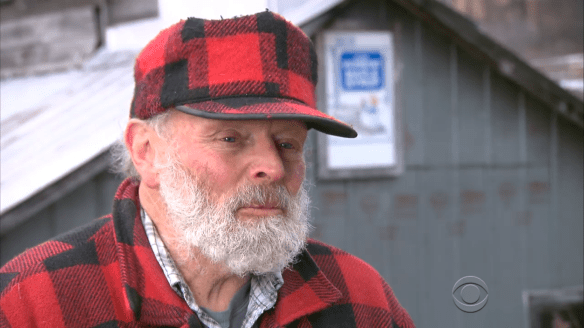
Yesterday night (Friday, 3/3), CBS Evening News ran a segment on the recent unusual weather patterns in the country . At about 0:42, our good Vermont friend David Silloway was interviewed about how maple sugaring season has come earlier and earlier over the years. [For those who are unfamiliar with how maple sugar is made, here is a link to the Silloway Farm’s maple sugar website.] Why is that so important to the Vermont maple sugar industry? Maple trees can only be tapped for sap (for making into maple syrup) during a few-weeks-long window of time in the transition from winter to spring when temperatures drop below freezing at night and then rise above freezing during the day. Unfortunately, climate change has long been identified as a threat to the Vermont maple sugar industry, both because of the added variability of time when tapping of trees is possible but also because it affects the quality of the syrup that is produced — one concrete example of how climate change will affect the U.S. economy.