Unknown's avatar

About citizenyang

http://law.scu.edu/faculty/profile/yang-tseming/

Swearing-in Ceremony for New Members of the California Bar

I was so proud to see a number of my former students get sworn in as new members of the California Bar in the Mission Church on the Santa Clara University campus.  Today’s joining the bar as full-fledged attorneys is the last stage of the transformation they started more than three years ago, when I first met them in my all 2016 1L torts course.  Even though I have been teaching law for more than two decades now and seen many classes of students successfully make this journey, both here at Santa Clara and at Vermont Law School, I am still amazed at the personal and professional growth that students undergo.  Congratulations to all!

Fellowship: Univ. of Arizona Law School, Natural Resource Use & Management Clinic (Tucson, AZ) (Deadline: Dec. 9, 2019)

Opportunity for recent graduates with an interest in natural resource use and management, western resource issues (including water rights and energy topics), and an interest in an academic fellowship.” “Fellow to assist with the University of Arizona’s Natural Resource Use & Management Clinic, which focuses on collaborative conservation projects focused on western lands and resources issues. Ideally, the fellow will be able to start by the beginning of the spring semester in mid-January in sunny Tucson, AZ.”

The posting is available here:

https://uacareers.com/postings/43340

Chamizal National Memorial, El Paso

IMG_9769

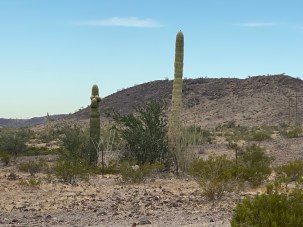
Last week, I drove with my parents from Houston to San Jose.  About 2000 miles in 3 days.  We did a couple of great side trips to White Sands National Monument and Chamizal National Memorial in El Paso.  Chamizal was particularly interesting.  It used to be located in Mexico, but is now part of the U.S.  Why?  The 1963 Treaty of Chamizal.

IMG_9692Under the 1848 Treaty of Guadalupe Hidalgo, the Rio Grande River is the formal boundary between the U.S. and Mexico for much of the US-Mexico border.  However, rivers naturally change their course over time, whether because of erosion, floods, or other natural events.  A serious flood in 1864 altered the course of the Rio Grand in the El Paso area, creating a land dispute between the US and Mexico that remained unresolved for nearly 100 years.  The land that now constitutes the Chamizal National Memorial had originally been located south of the Rio Grande; however, with the change of the Rio Grande’s course, it was suddenly located north of it.  Given that the Treaty of Guadalupe Hidalgo designated the north side as US territory, that might seem to make the Chamizal land US soil.  (Similar things happened, but in reverse, on other parts of the Rio Grande.)
IMG_9015On the other hand, under long-standing doctrines governing land ownership related to rivers, ownership should not have changed.  Gradual changes of the course of rivers, usually due to gradual erosion of river banks and gradual deposit of land on other parts of river banks (a process referred to as accretion), is deemed to change property boundaries (and thus land ownership).  However, as the late Professor Joseph Sax taught me in law school many many years ago, sudden changes of the course of a river, for example when a flood suddenly and drastically changes a river bed and thus the course of a stream (a process referred to as avulsion), do not alter property ownership and land boundaries.  Hence, given that the change in the course of the Rio Grande was due to a sudden flood, land ownership was not altered.  (There were of course other legal issues involved in the dispute.)

The question of land ownership and the international boundary took almost a hundred years to resolve.  Under the Chamizal Treaty, the US and Mexico formally relinquished claims to lands that had switched sides due to the 1864 flood.  The US created the Chamizal National Memorial on portions of the land that changed nationality, but left the original boundary markers.

My parents have one foot in Mexico and one in the U.S., had the boundary been there as it was originally negotiated in 1848.  (On a more sober note, the current border slat-fence is easily visible and provides an unsettling sight of our current relationship with our neighbors to the South.)

End of short lesson about water law! Below are some additional photos of our visit to White Sands National Monument – a highly recommended park!
Fellowships/Internship: Earthrights International (Washington, DC)

 
From an email announcement (both opportunities are in Washington, DC):
 
EarthRights International is currently looking to hire post-graduate legal fellows (two-years, paid) and summer legal interns. Please consider forwarding to any interested students.
 
Bertha Justice Legal Fellow  – This two-year paid fellowship fellowship is geared towards recent U.S. law school graduates and LLM degree holders hoping to practice in the United States. Deadline for submissions is December 15, 2019.
 
Legal Intern (Summer, 2020) – EarthRights legal interns will have the opportunity to participate in various projects associated with our cases, including legal research and writing and assistance in all phases of litigation, as well as other legal work including development of new cases, monitoring and exploring developments in international human rights and environmental law, researching and utilizing other mechanisms of corporate accountability.  Deadline for submissions is January 15, 2019.
 
Interested candidates should visit the EarthRights International careers page for more information about these opportunities.
 
EarthRights International is an equal opportunity employer that does not discriminate in its hiring practices, and actively encourages people of color, women, people with disabilities, and LGBTQI people to apply.
 
For more information on the work of EarthRights International visit www.earthrights.org

Phil Gregory (JD/MBA SCU ’80) Talk about Juliana v. United States

Great inspirational presentation by Phil Gregory (JD/MBA ’80) on his work as co-lead counsel for the Juliana v. United States case, pending in the 9th Circuit now.  Professor Ken Manaster gave really interesting introduction that sought to put the Juliana case into the context of other, more traditional environmental litigation.

For more information about the Juliana case, especially the various court filings, see https://www.ourchildrenstrust.org/juliana-v-us.

2019 2d East Asia Forum on Climate Change Adaptation and Disaster Management Law and Policy at the National University of Kaohsiung, Kaohsiung City, Taiwan, October 17 & 18, 2019

I am looking forward to be joining this climate change conference later this week, which is organized by Professor Hsing-Hao Wu, Director of the International Relations Research Center at NUK, and honored to give one of the keynote speeches.

列印