
See the symposium agenda below. Please rsvp (via link on symposium webpage http://law.scu.edu/ai1ec_event/2014-journal-of-international-law-symposium-2/) if interested in attending. It will be on the Santa Clara campus.
http://law.scu.edu/ai1ec_event/2014-journal-of-international-law-symposium-2/
The 2014 Santa Clara Journal of International Law Symposium
“Environment and Human Rights Law”
Friday, January 24, and Saturday, January 25, 2014
Williman Room, Benson Center
Santa Clara University
Williman Room, Benson Center
Santa Clara University
Register for the symposium here
Hosted by Santa Clara Law, the Santa Clara Journal of International Law, and the Center for Global Law and Policy
Co-sponsored by:



and IEnLIG
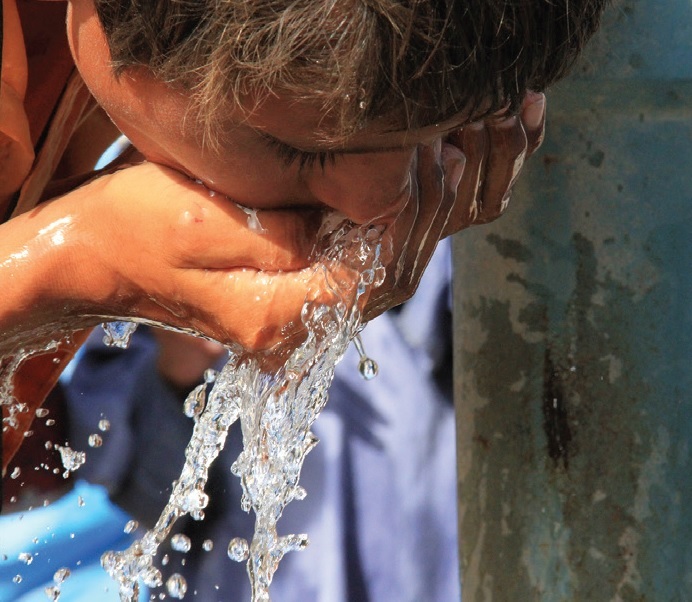
The relationship between international human rights law and the environment has been of interest to scholars and activists for some time, yet recent years have seen a rapid evolution of the issues. Increasingly, activists bring cases relating human rights concerns to issues such as climate change, the discriminatory effects of environmental degradation, and soil and water pollution from mineral exploration activities. Matters are heard before domestic courts and international human rights bodies, such as the African Commission on Human and Peoples’ Rights, the European Court of Human Rights, and the Inter-American Commission and Court of Human Rights. The high visibility of transnational and global environmental challenges, and the severe impacts they impose upon vulnerable groups — including women, children, and indigenous people — has generated interest in the role that international human rights and environmental law play in addressing such problems.
The UN Human Rights Council appointed an independent expert on the human right to water in 2008, and the UN General Assembly explicitly recognized a human right to water in 2010. More recently, in 2012, the Human Rights Council appointed John Knox, a U.S. law professor, as an Independent Expert on human rights and the environment.
As Professor Knox has noted, many issues still require further study and clarification. This symposium represents one important effort to explore pressing issues in the field. The main papers for this symposium address: the relationship to food security; compensation questions related to the rising sea-level caused by climate change; the rights of indigenous people to land and natural resources; and the relationship between substantive and procedural components of the human right to a healthy environment.
Keynote Speaker: Dinah Shelton
Symposium Schedule
Speaker Biographies
Abstracts of Conference Papers
Symposium Schedule
Friday, January 24, 2014
Williman Room, Benson Center
Friday, January 24, 2014
Williman Room, Benson Center
|
9:00–9:30 a.m.
|
Registration, Refreshments
|
|
9:30–9:45 a.m.
|
Welcome
Tseming Yang, Professor of Law
John Fox, Editor-in-Chief of the Journal of International Law
Hazella Bowmani, Symposium Editor of the Journal of International Law
|
|
9:45–11:15 a.m.
|
Panel 1
The Human Right to a Healthy Environment
Rebecca Bratspies, City University of New York School of Law Commentators:
Marcos Orellana, Center for International Environmental LawMargarette May Macaulay, former Judge at the Inter-American Court of Human Rights
Moderator:
Francisco Rivera Juaristi, Santa Clara Law
|
|
11:15–11:30 a.m.
|
Break
|
|
11:30 a.m–1:00 p.m.
|
Panel 2
Promoting Food Security: Human Rights, the Environment and the Fragmented Nature of International Legal RegulationDonald K. Anton, Australian National University College of Law
Commentators:
Sumudu Atapattu, University of Wisconsin Law SchoolCarmen Gonzalez, Seattle University School of Law
Moderator:
Emily Yozell, Attorney, Costa Rica
|
|
1:00–2:30 p.m.
|
Lunch (and Special Lunchtime Presentation)
Speaker: Martin Wagner, Earthjustice
|
|
2:30–4:00 p.m.
|
Panel 3
Rehabilitation: A Proposal for a Compensation Mechanism For Small Island StatesMaxine Burkett, University of Hawaii, William S. Richardson School of Law
Commentators:
Damilola Olawuyi, University of Oxford, Faculty of LawRandall S. Abate, Florida A&M University College of Law
Moderator:
Natalie Bridgeman Fields, Accountability Counsel
|
|
4:00–4:15 p.m.
|
Break
|
|
4:15–5:15 p.m.
|
Keynote Address
Dinah Shelton, George Washington University
|
|
5:15-6:30 p.m.
|
Reception
Foyer, Arts & Sciences Building
|
Saturday, January 25, 2014
Williman Room, Benson Center
Williman Room, Benson Center
|
8:30–9:00 a.m.
|
Breakfast
|
|
9:00–10:30
|
Panel 4
Indigenous Human Rights and the Ethics of “Remediation”: Redressing the Legacy of Uranium Contamination for Native Peoples and Native Lands
Rebecca Tsosie, Arizona State University, Sandra Day O’Connor College of Law Commentators:
Robert T. Coulter, Indian Law Resource CenterElizabeth A. Kronk Warner, University of Kansas, School of Law
Moderator:
David Takacs, UC Hastings College of the Law
|
|
10:30–10:45 a.m.
|
Break
|
|
10:45 a.m.–12:00 p.m.
|
Concluding Roundtable and Closing Remarks
|
JIL Symposium Speakers Biographies
 Randall S. Abate
Randall S. Abate is a Professor of Law, Director of the Center for International Law and Justice, and Project Director of the Environment, Development & Justice Program at Florida A&M University College of Law in Orlando, Florida. At Florida A&M, Professor Abate teaches Environmental Law, International Environmental Law, Environmental Justice: Domestic and International, Human Rights and the Environment Seminar, Advanced Topics in Environmental Law Seminar, Ocean and Coastal Law Seminar, and Constitutional Law I and II. Professor Abate joined the Florida A&M College of Law faculty in 2009 with fifteen years of full-time law teaching experience at Rutgers, Florida State, Florida Coastal, Widener, and Vermont. He has taught international and comparative environmental law courses in study abroad programs in Nairobi, Vancouver, Northern India, Buenos Aires, and the Cayman Islands. Professor Abate has published and presented widely on environmental law topics, with a recent emphasis on climate change law and justice. He is the co-editor (with Professor Elizabeth Kronk of the University of Kansas School of Law) of Climate Change and Indigenous Peoples: The Search for Legal Remedies (Edward Elgar Publishing 2013). In April 2013, he taught a climate change law and justice course in Odessa, Ukraine on a Fulbright Specialists grant. Early in his career, Professor Abate handled environmental law matters at two law firms in Manhattan. He holds a B.A. from the University of Rochester and a J.D. and M.S.E.L. (Environmental Law and Policy) from Vermont Law School.
 Donald Anton
Donald Anton is an Associate Professor at Australian National University and is a recognized expert in international law. He has appeared as Counsel in the International Tribunal for the Law of the Sea and hasserved as Counsel and Attorney of Record for amicus briefs filed in Kiobel v. Royal Dutch Petroleum (SCOTUS) and Chevron v. Donziger (2nd Cir.). Professor Anton consults regularly with government and international organizations on matters of international law. He is currently leading an international team of researchers, funded by the Australian Government, in a three-year project testing underlying assumptions surrounding deep seabed mining by developing countries in the Asia pacific. Professor Anton has served in a variety of international law leadership positions. He is currently Co-Chair of the American Society of International Law International Environmental Law Interest Group. He was a Member of the International Law Association’s Committee on International Law on Sustainable Development, which produced the 2012 Sophia Guiding Statement on Judicial Elaboration of Sustainable Development. Professor Anton is a regular visiting professor at law schools and institutions around the world, including Michigan Law School, Yangon University Law Department, and the United Nations Institute of Training and Research.
 Sumudu Atapattu
Sumudu Atapattu is the Associate Director of the Global Legal Studies Center at the University of Wisconsin Law School. She teaches seminar courses on “International Environmental Law” and “Climate Change, Human Rights and the Environment.” She has LLM and PhD Degrees from University of Cambridge and is an Attorney-at-Law of the Supreme Court of Sri Lanka. She has published widely on issues relating to sustainable development, human rights and the environment, and climate change and her book entitled Emerging Principles of International Environmental Law was published by Transnational Publishers in 2006. She is also the Lead Counsel for Human Rights at the Center for International Environmental Law, Montreal, Canada and is an Advisory Board Member of the McGill International Journal of Sustainable Development Law and Policy. Before coming to the United States, she was an Associate Professor at University of Colombo Law School and a Consultant to the Law & Society Trust in Colombo, Sri Lanka Her research interests include human rights and environment, climate change, environmental migration and sustainable development.
 Rebecca Bratspies
Rebecca Bratspies is a Professor of Law at the CUNY School of Law where she is the founding director of the CUNY Center for Urban Environmental Reform. She has published widely on regulating under conditions of uncertainty—with a focus on environmental democracy, regulating new technologies and corporate responsibility. Her recent scholarship explores questions of sustainability, and the intersection of human rights and environmental regulation. She is a scholar with the Center for Progressive Reform, the Environmental Law Collective and has served as an appointed member of the ABA Standing Committee on Environmental Law, a member of the Executive Committee of the American Association of Law Schools Section on the Environment, and an advisor to the Consultative Group on Agricultural Research. Before entering academia, Professor Bratspies served as a judicial law clerk to the Honorable C. Arlen Beam of the Eighth Circuit Court of Appeals. As a Henry Luce Foundation Scholar, Professor Bratspies spent a year seconded to the Republic of China (Taiwan) Environmental Protection Administration. She has taught at the University of Idaho, Michigan State University and NYU. She holds a BA in Biology from Wesleyan University and a J.D. cum laude from the University of Pennsylvania.
 Natalie Bridgeman Fields
Natalie Bridgeman Fields is the Executive Director of the non-profit organization Accountability Counsel, based in San Francisco, California. She founded the organization in 2009 upon receiving an Echoing Green Fellowships for her groundbreaking social entrepreneurship. Natalie oversees a team of lawyers who defend the environmental and human rights of vulnerable communities and work to improve accountability policy at international institutions. Accountability Counsel’s work pays particular attention to women, girls and other marginalized groups, who are often the most deeply harmed by abuses. Previously, she served as a consultant on accountability to two international development banks. As a lawyer at a large firm and later through her own law office, she litigated corporate, human rights, and environmental cases in U.S. courts. Natalie speaks widely on issues related to corporate accountability and business and human rights. In July 2012, Natalie received a Genius Award from Elle magazine. She is a graduate of Cornell University and UCLA School of Law, where she was Editor-in-Chief of the Journal of International Law and Foreign Affairs.
 Maxine Burkett
Maxine Burkett is a Professor of Law at the University of Hawaii, William S. Richardson School of Law who teaches Climate Change Law and Policy, Torts, Environmental Law, International Environmental Law, and International Development. She has written extensively in the area of climate change law and policy from diverse perspectives with a particular focus on climate justice, exploring the disparate impact of climate change on vulnerable communities in the United States and globally. Professor Burkett has presented her research on the law and policy of climate change throughout the United States and in West Africa, Asia, Europe and the Caribbean. In 2010, she served as the Wayne Morse Chair of Law and Politics at the Wayne Morse Center, University of Oregon, becoming the youngest scholar to have held the position. Professor Burkett also served as the inaugural Director of the Center for Island Climate Adaptation and Policy (ICAP). As the Director of ICAP, she led projects to address climate change law, policy, and planning for island communities in Hawaii, the Pacific region, and beyond. Prior to joining the University of Hawaii, Professor Burkett taught at the University of Colorado Law School. She studied at Oxford University, Exeter College and earned her B.A. from Williams College, and her J.D. from the University of California, Berkeley.
 Robert T. Coulter
Robert Coulter is an attorney who practices in the fields of Indian law and international human rights. He is the founder and Executive Director of the Indian Law Resource Center, which provides legal assistance for indigenous peoples throughout the Americas. He is also an enrolled member of the Citizen Potawatomi Nation and a Justice of the Supreme Court of the Citizen Potawatomi Nation. With more than 35 years of legal experience in the field of Indian affairs and human rights, Mr. Coulter has published numerous articles in these and other fields of law. Before starting the Indian Law Resoruce Center in 1978, he was Acting Executive Director of the Institute for the Development of Indian Law, staff attorney for the Native American Legal Defense and Education Fund and the United States Commission on Civil Rights. In 2001 Mr. Coulter was awarded the Lawrence A. Wein Prize for Social Responsibility by Columbia University Law School and in 2002 the Bicentennial Medal by Williams College. He received his bachelor’s degree from Williams College and his law degree cum laude from Columbia University Law School.
 Carmen G. Gonzalez
Carmen Gonzalez is a Professor of Law at Seattle University School of Law. She has published widely in the areas of international environmental law, environmental justice, trade and the environment, and food security, and recently co-edited Presumed Incompetent, a book on the experiences of women faculty of color. She currently serves on the Board of Trustees of Earthjustice and on the Research Committee of the International Union for the Conservation of Nature (IUCN) Academy of Environmental Law. She is also a member scholar of the Center for Progressive Reform, a non-profit research and educational organization that seeks to inform policy debates regarding environmental regulation. From 2011 to 2012, Professor Gonzalez chaired the Environmental Law Section of the Association of American Law Schools. She has served as member and Vice-Chair of the International Subcommittee of the National Environmental Justice Advisory Council (an advisory body to the U.S. Environmental Protection Agency on environmental justice issues), and has represented non-governmental organizations in multilateral environmental treaty negotiations. Professor Gonzalez received her B.A. in Political Science from Yale University and her J.D. from Harvard Law School.
 Elizabeth A. Kronk Warner
Elizabeth Kronk Warner is an Associate Professor of Law at the University of Kansas, School of Law where she teaches property, environmental and natural resources law and federal Indian law. She also serves as the director of the Tribal law and Government Center and as an Affiliated Professor of Indigenous Studies. Prior to joining the University of Kansas, she taught at Texas Tech University and the University of Montana. In 2010, Professor Kronk Warner was selected to serve as an Environmental Justice Young Fellow through the Woodrow Wilson International Center for Scholars and U.S.-China Partnership for Environmental Law at Vermont Law School. In addition to teaching, Professor Kronk Warner serves as an appellate judge for the Sault Ste. Marie Tribe of Chippewa Indians Court of Appeals in Michigan. Before entering academia, Professor Kronk practiced environmental, Indian, and energy law as an associate in the Washington, D.C., offices of Latham & Watkins LLP and Troutman Sanders LLP. She previously served as chair of the Federal Bar Association Indian Law Section and was elected to the Association’s national board of directors in 2011. Professor Kronk Warner is a citizen of the Sault Ste. Marie Tribe of Chippewa Indians. She graduated from Cornell University with a Bachelor of Science in Communication and received her law degree from the University of Michigan Law School.
Margarette May Macaulay
Margarette May Macaulay is a Jamaican attorney and former Judge at the Inter-American Court of Human Rights. Ms. Macaulay continues her practice as an Attorney-at-Law and women’s and children’s advocate, with her own Chambers in Jamaica. She has worked on several emblematic cases involving indigenous land rights. She is also a Notary Public and a Supreme Court Mediator and Associate Arbitrator, devoting her time to addressing matters of Constitutional and Fundamental Human Rights Law, Property Rights Law and Conveyance, General Contract Law, Estates Law and Criminal Law. Ms. Macaulay chaired the Family Law Committee of the Jamaican Bar Association and is a member of the Law Reform Committee, the Publications Committee, and the Human Rights and Constitutional Committee. She is a long serving member of the Disciplinary Committee of the General Legal Council of Jamaica. She is also a member of several human rights organizations nationally and internationally, including the
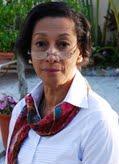
Margarette May Macaulay is a Jamaican attorney and former Judge at the Inter-American Court of Human Rights. Ms. Macaulay continues her practice as an Attorney-at-Law and women’s and children’s advocate, with her own Chambers in Jamaica. She has worked on several emblematic cases involving indigenous land rights. She is also a Notary Public and a Supreme Court Mediator and Associate Arbitrator, devoting her time to addressing matters of Constitutional and Fundamental Human Rights Law, Property Rights Law and Conveyance, General Contract Law, Estates Law and Criminal Law. Ms. Macaulay chaired the Family Law Committee of the Jamaican Bar Association and is a member of the Law Reform Committee, the Publications Committee, and the Human Rights and Constitutional Committee. She is a long serving member of the Disciplinary Committee of the General Legal Council of Jamaica. She is also a member of several human rights organizations nationally and internationally, including the
Coalition for an International Criminal Court and the Women’s Gender Initiative, both in the Hague. Ms. Macaulay has presented papers in international, regional, and national conferences and has facilitated in training sessions. She also taught a course on human rights at American University, Washington College of Law in 2012 and the University of Peace 2012 and 2013. Ms. Macaulay earned her law degree from the University of London, Holborn College.
 Damilola S. Olawuyi
Dr. Damilola S. Olawuyi, LL.M (Harvard), D.Phil (Oxford); is the Director (Research and Training) of the Institute for Oil, Gas, Energy, Environment and Sustainable Development (OGEES Institute) at Afe Babalola University, Nigeria. His research and published work cover the areas of International Environmental Law, Human Rights Law, Energy and Natural Resources Law. His current research explores the cross cutting linkages between global climate change and international human rights, particularly how climate change mitigation and adaptation projects could potentially affect the enjoyment of fundamental human rights. He has received several national and international awards including the Sloane Robinson Award, the World Energy Council’s Future Energy Leader’s Award, and the Alberta Law Foundation Scholarship Award.
Mr. Olawuyi is also a member of many professional societies including the World Energy Council, the Association of International Petroleum Negotiators, the Environmental Law Alliance Worldwide, and the International Law Association. Dr. Olawuyi holds a doctoral degree in energy and environmental law from the University of Oxford, a LL.M from Harvard Law School and another LL.M from the University of Calgary, Canada. He earned his LL.B from Igbinedion University, Nigeria, graduating in First Class Honours and his BL degree from the Nigerian Law School, also graduating in First Class Honours. He also holds a Diploma in International Environmental Law from the United Nations Institute for Research and Training (UNITAR), in Switzerland
 Marcos A. Orellana
Dr. Marcos A. Orellana (LL.M., S.J.D.) is Director of CIEL’s Environmental Health Program and Adjunct Professor at the American University Washington College of Law. At CIEL Dr Orellana has worked with NGOs and local communities worldwide to strengthen tools to protect the vital functions of the planet and secure global environmental justice, including with respect to chemicals and waste, oceans and biodiversity, and trade and investment. Prior to joining CIEL, Dr. Orellana was a Fellow to the Lauterpacht Research Centre for International Law of the University of Cambridge, UK. He also was a Visiting Scholar with the Environmental Law Institute in Washington DC and Instructor Professor of international law at the Universidad de Talca, Chile. Dr Orellana has acted as legal counsel to the Chilean Ministry of Foreign Affairs on international environmental issues. In that capacity Dr Orellana has worked with MEAs and the Rio+20 process. Dr Orellana has also acted as consultant to several International Institutions, including the UN Environment Programme and the Office of the High Commissioner for Human Rights.
 Francisco Rivera Juaristi
Prior to coming to Santa Clara University School of Law as founding director of the law school’s International Human Rights Clinic, Francisco was an adjunct professor of international law and human rights at the Inter-American University of Puerto Rico. He is a former senior staff attorney at the Inter-American Court of Human Rights of the Organization of American States seated in Costa Rica, where he was also director of that court’s internship program. In the late 1990s, he also served as Executive Director of the Amnesty International Section in Puerto Rico. He has been a consultant for a number of non-governmental organizations (NGOs), as well as for the United Nations Development Fund (UNDP), the International Labor Organization (ILO), and the Inter-American Institute of Human Rights (IIHR).
Francisco has worked on a number of high-profile cases involving grave human rights violations, particularly throughout Latin America. His publications include issues such as indigenous land rights, as well as corporate and individual responsibility for human rights violations before both domestic and international fora. He has directed the law school’s Costa Rica summer program and has previously taught courses on Public International Law, International Courts, and International Human Rights Law.
 Dinah Shelton Dinah L. Shelton is the Manatt/Ahn professor of law (emeritus) at George Washington University Law School. Her extensive writing on international human rights has received many awards, including the 2005 New York Public Library Best Research Book Award, the 2000 Certificate of Merit from the American Society of International Law, and the 1982 Inter-American Bar Association Book Prize. In 2006, she was awarded the prestigious Elizabeth Haub Prize in Environmental Law and has also been awarded the Burhenne Prize in international environmental law (2012), the Riesenfeld award in international law (2013), the Goler T. Butcher Prize in human rights (2013), and the ASIL’s prominent woman in international law recognition. In 2011 she receive the degree of doctor honoris causa from the University of Stockholm.
Professor Shelton serves on the boards of many human rights and environmental organizations. She is a member of the board of editors of the American Journal of International Law and was vice-president of the American Society of International Law. In 2009, Professor Shelton became the first woman nominated by the United States to become a member of the Inter-American Commission on Human Rights, and served as President of the Commission in 2010. She has also served as a legal consultant to the United Nations Environment Programme, UNITAR, World Health Organization, the European Union, Council of Europe, and the Organization of American States.
Professor Shelton received her B.A. and J.D. from the University of California, Berkeley. Prior to her appointment to GWU law school, she was a professor of international law and director of the doctoral program in international human rights law at the University of Notre Dame Law School. She previously taught at Santa Clara University and has been a visiting lecturer at the University of California, Davis, Stanford University, University of California, Berkeley, the University of Paris, and the University of Strasbourg, France. From 1987 to 1989, she was the director of the Office of Staff Attorneys at the U.S. Court of Appeals for the Ninth Circuit.
 David TakacsProfessor David Takacs is an Associate Professor at UC Hastings College of the Law. He has been a consultant for international NGOs and U.S. government agencies, analyzing legal and policy issues pertaining to REDD (Reducing Emissions from Deforestation and forest Degradation) and global climate change. His scholarly work lies at the intersection between international environmental and human rights law. He is the author of ”The Idea of Biodiversity” (Johns Hopkins U. Press). Before his legal career, Professor Takacswas a professor in Earth Systems Science & Policy at CSU Monterey Bay, a lecturer in the John S. Knight Writing Program at Cornell, and a Peace Corps Forestry Volunteer in Senegal. Professor Takacs holds a J.D. from Hastings, an LL.M. from the School of Oriental & African Studies at the University of London, and a B.S. in Biology, M.A., and Ph.D. in Science & Technology Studies from Cornell University.
 Rebecca Tsosie
Rebecca Tsosie is a Regent’s Professor of Law at Arizona State University, Sandra Day O’Connor College of Law. She teaches in the areas of Indian law, Property, Bioethics, and Critical Race Theory, as well as seminars in International Indigenous Rights and in the College’s Tribal Policy, Law, and Government Master of Laws program. Professor Tsosie has written and published widely on doctrinal and theoretical issues related to tribal sovereignty, environmental policy, and cultural rights, and her current research deals with Native rights to genetic resources. Professor Tsosie, who is of Yaqui descent, has worked extensively with tribal governments and organizations and serves as a Supreme Court Justice for the Fort McDowell Yavapai Nation. She annually speaks at several national conferences on tribal sovereignty, self-determination, and tribal rights to environmental and cultural resources. Professor Tsosie holds a bachelor’s degree and J.D. from the University of California, Los Angeles.
nd a B.S. in Biology, M.A., and Ph.D. in Science & Technology Studies from Cornell University.
 Martin WagnerMartin Wagner is the director of Earthjustice’s International Program, which promotes the protection of human rights to a clean and healthy environment through application of trade measures, international human rights and U.S. law. His work includes litigation against corporations before U.S. courts and international institutions for environmental practices that violate international human rights, including the the human right to a healthy environment. Mr. Wagner also teaches international environmental law and international trade and the environment at the Golden Gate University School of Law. Before coming to Earthjustice in 1996, Mr. Wagner was a law clerk for Judge Robert Beezer of the U.S. Court of Appeals for the Ninth Circuit, and spent five years litigating environmental citizen suits in U.S. courts and representing victims of human rights violations in international institutions. Mr. Wagner graduated from Whitman College with a degree in geology and then became a community development volunteer with the Peace Corps in Senegal, West Africa. He attended the University of Virginia Law School, where he was executive editor of the Virginia Journal of International Law and graduated in the top ten percent of his class.
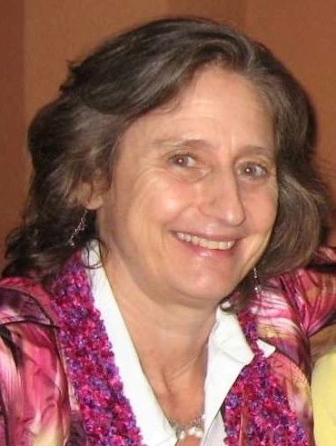 Emily J. Yozell
Emily J. Yozell is an attorney based in Costa Rica practicing in the fields of international human rights and environment. For the past 25 years, she has worked in Latin America in national, regional and global forums, advocating on behalf of local communities, farmworkers, indigenous and other ethnic and cultural minorities, to promote their rights and train community leaders. Ms. Yozell co-founded the first public interest environmental litigation organization in Central America and has collaborated with numerous non-governmental human rights organizations throughout the Americas. Ms. Yozell has led many legal and fact-finding delegations investigating allegations of human rights abuses as well as election monitoring for international NGOs. Ms. Yozell has served as adjunct professor for several U.S. law school and university study abroad programs in Central America, as well as guest lecturer for courses and symposiums in the U.S.. Prior to moving to Costa Rica, she practiced criminal defense and immigration law in the U.S. and Puerto Rico. Ms. Yozell has a B.A. in Latin American Studies from Antioch College and a J.D. from Northeastern University School of Law.
Abstracts
The Human Right to a Healthy EnvironmentRebecca Bratspies, City University of New York School of Law
This paper will trace the emergence of a human right to a healthy environment, and will detail the potential procedural and substantive components of such a right. Having laid this groundwork, this paper will explore why substantive environmental rights have gained less traction in international legal discourse than have procedural rights, situating the debate over environmental human rights in a broader narrative about the relationship between procedural guarantees and substantive outcomes. Focusing particularly on the rights of prior informed consent, and access to justice, this paper will map out a role for private, non-state actors as front-line human rights decision-makers in the context of resource extraction decisions that impact indigenous communities. Building on this analysis of the human rights obligations of non-state actors, this article will suggest a state responsibility to create an effective regulatory system capable of enforcing those obligations. Finally, turning to the United States, this paper will demonstrate how interpreting domestic legal obligations through the lens of human rights can give meaning to a legislative and regulatory commitment to participation, fairness and accountability, thereby making the domestic regulatory process not only better and fairer, but also more likely to be perceived as legitimate by the general public.
Promoting Food Security: Human Rights, the Environment and the Imperfect Nature of Overlapping International Legal RegulationDon Anton, Australian National University College of Law
The international community continues to struggle with an effective response to the continuing problem of securing global food security. All agree that avoiding future food crises is paramount. Almost all agree that international solutions are needed. There is disagreement, however, on the specifics of these international solutions and tensions continue to make effective action difficult. These tensions play out in the competing policy prescriptions by governments, international institutions, and scholars. States, themselves, act inconsistently and disagree with each other about the measures needed to promote food security. All this dissonance is exacerbated by overlapping branches of international law that imperfectly promote food security worldwide. International environmental law, human rights, trade disciplines, refugee law, natural disaster law, and norms related to human security all have something to say about the global food system. These regimes contain rules that govern the right to food, the mitigation of environmental threats, agrarian reform, property tenure, agricultural patents, resource management, freedom of trade and investment, and population control. Nothing, however, is a perfect “fit”.
The aim of this paper is to provide an analysis of the current legal and institutional governance structure of the international food system. It seeks to provide an convincing account of the disparate norms and institutional framework that bear on food security from the environmental, human rights, agricultural, development, trade, finance, disaster, security, and population points of view. This is a necessary first step in thinking holistically about the effective global governance of food. It is also needed in order to develop an understanding of how all of these functionally differentiated regimes interact with each other, the situations in which priorities and values conflict, and the ways in which states and other actors make use of these regimes to best suit their interests (to protect food security or otherwise). Before any intelligent attempt at normative integration of global food governance can succeed, a clear understanding must be developed of the ways in which the overlapping legal regimes govern the production and distribution and food and shape the dynamics of famine.
Indigenous Human Rights and the Ethics of “Remediation”: Redressing the Legacy of Uranium Contamination for Native Peoples and Native LandsRebecca Tsosie, Arizona State University, Sandra Day O’Connor College of Law
This essay explores the legacy of uranium contamination for Native peoples throughout the United States, evaluating the consequences of historic government policies and the way that these policies are perpetuated in the present era. The paper also engages the possibilities for “remediation,” within domestic and international frameworks of “environmental justice.” The paper advances the view that a human rights approach requires holistic attention to the current environmental and public health issues, as well as the economic and ethical issues that continue to divide nations at both the domestic and international levels, and prevent coherent policy strategies. In addition, there is a need to engage the policies of “war” and “peace” that have driven the global policy agenda, to the disadvantage of Native peoples, as well as the dynamic of colonialism that perpetuates a notion of Native lands as “resource” colonies for dominant policy interests. An “ethics of remediation,” therefore, is as much about redressing inequities of power, capacity, and agency, as it is about “environmental justice.”
 Citizen Yang